
Table of Contents
- What Is UV Putty and How Does It Work?
- What Advantages of UV Putty for Auto Body Shops
- How to Apply UV Putty: Step-by-Step Operation Guide
- UV Putty vs Traditional Polyester Body Filler: Key Differences
- Common Application Scenarios for SYBON UV Putty
- Storage, Safety & Handling Tips for UV Putty
What Is UV Putty and How Does It Work?
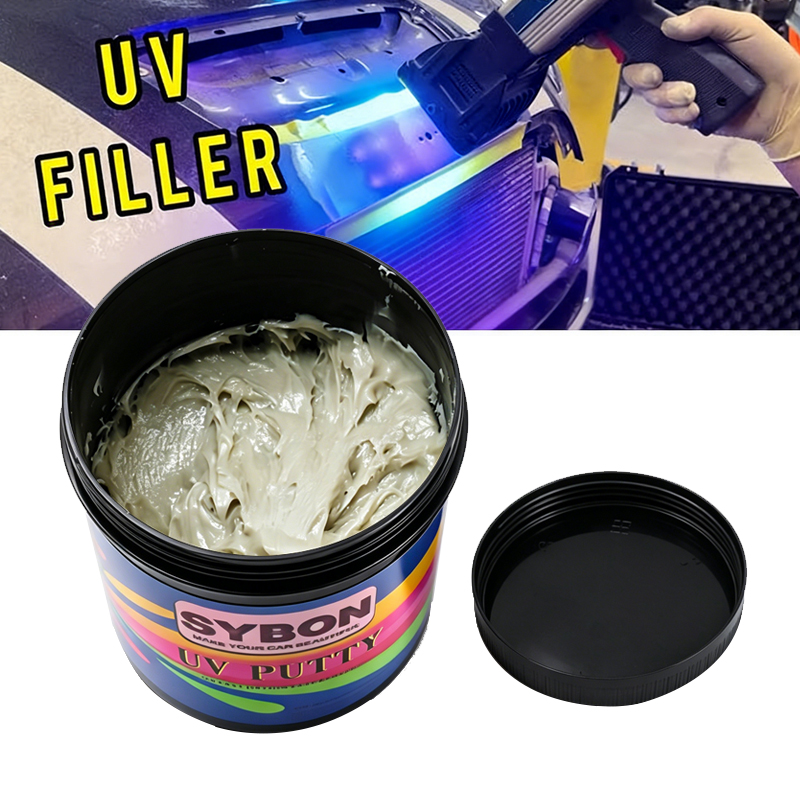
- UV putty, also known as UV filler putty, is a one-component repair compound specially engineered for automotive body surface restoration. Unlike conventional two-part body fillers that rely on chemical hardeners to cure, this innovative product hardens instantly under ultraviolet light exposure.
- Professionals in the auto refinishing industry constantly seek solutions that cut working time while maintaining excellent finished quality. Traditional putty products often require long waiting periods for full curing, which slows down the whole repair workflow. UV putty addresses this pain point directly, delivering fast drying performance without compromising strength or sanding properties.
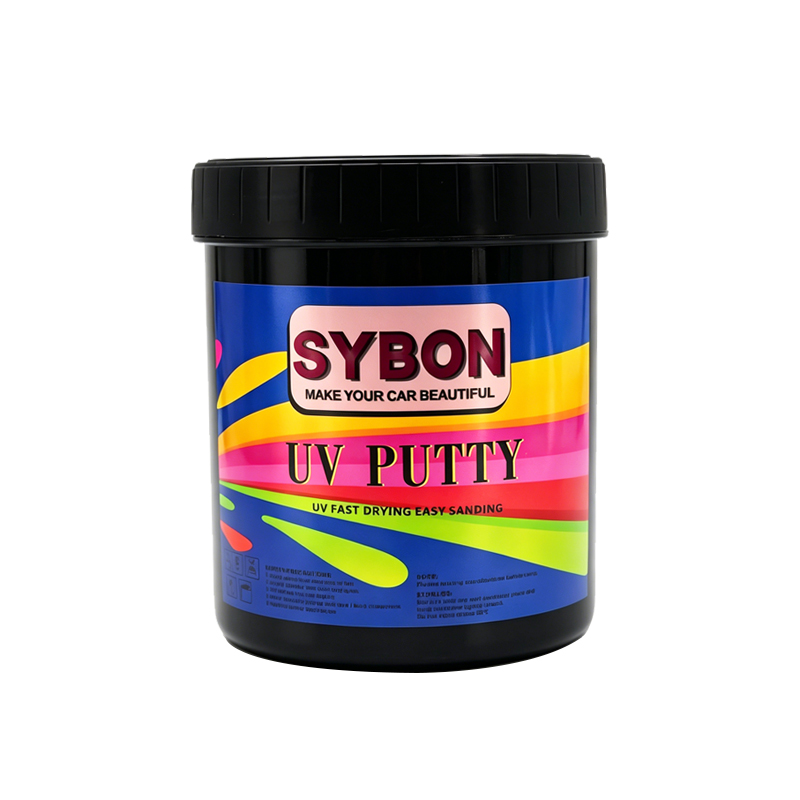
- This SYBON UV putty adopts mature European formulation technology. It is a 1K single-component material, meaning users do not need to mix hardener manually before use. Simply apply the putty on the damaged substrate, then use a UV lamp to trigger the curing reaction. Once exposed to qualified UV light, the material forms a solid, stable repair layer in minutes
What Advantages of UV Putty for Auto Body Shops?
- As one of the most revolutionary refinishing materials in recent years, UV putty brings multiple practical benefits for professional painters and auto body technicians. Here are its seven most valuable strengths for daily repair work.
- First, it delivers ultra-fast UV curing speed. There is no lengthy air-drying waiting time. After UV irradiation, the putty cures completely within a short time, which drastically shortens the turnaround time of each repair job. Shops can finish more vehicles every day and improve overall workshop efficiency.
- Second, it features easy sanding performance. Fully cured UV putty maintains a balanced hardness. Technicians can sand it smoothly with standard sandpaper, without encountering gummy clogging issues that often trouble traditional fillers. The surface after sanding stays flat and clean, ready for primer and topcoat application.
- Third, it is a convenient 1K single-pack formula. There is no weighing or mixing of hardener required. This eliminates common mistakes such as improper mixing ratios, wasted materials, and inconsistent curing results. You can scoop and apply directly from the container whenever you need it.
- Fourth, it offers reliable substrate adhesion. The formula bonds firmly to metal, fiberglass, original painted surfaces and many common automotive base materials. It will not peel or shrink easily after curing, ensuring long-lasting repair results for dents, scratches and small surface defects.
- Fifth, minimal shrinkage after curing. Many traditional body fillers experience slight volume shrinkage as they dry, which may create visible dents on the finished paint layer later. UV putty cures through photo-crosslinking, so shrinkage is kept to a very low level for premium quality refinishing.
- Sixth, it supports thin and thick filling applications. Whether you need to fill shallow scratches or deeper small dents, this UV putty can adapt. You can build up layers as needed for different repair depths, without sacrificing the structural integrity of the repair patch.
- Seventh, it reduces material waste. Since no mixing is needed, you only take out the amount of UV putty you plan to use. Unused product inside the jar remains stable and usable, unlike mixed polyester putty which hardens quickly and must be discarded once blended.
How to Apply UV Putty: Step-by-Step Operation Guide
- Proper application determines the final repair effect of UV putty. Follow these simple steps for consistent, professional results every time.
- Start with surface preparation. Clean the repair area thoroughly, removing grease, wax, dust and loose paint. Sand the target surface to create slight roughness, then wipe away all sanding dust. A clean, dry substrate is essential to guarantee strong adhesion of UV putty.
- Take an appropriate quantity of UV putty from the jar with a putty knife. Spread it evenly over the damaged spot, smoothing the material to match the contour of the surrounding panel. Shape the layer as needed, and remove excess material during this stage before curing.
- Use a professional UV curing lamp to illuminate the applied putty. Keep the recommended distance between the lamp and surface. Make sure every part of the applied layer receives sufficient UV exposure. Once fully cured, move on to sanding work.
- Sand the cured UV putty progressively. Start with coarser grit sandpaper to shape the surface, then switch to finer grits to smooth the area. Wipe off dust after sanding. Now the surface is ready for primer application and subsequent painting processes.
UV Putty vs Traditional Polyester Body Filler: Key Differences
- Many auto shop owners wonder whether UV putty can replace conventional polyester body filler. Both products serve surface filling purposes, but they differ greatly in working mechanism and operational experience.
- Traditional polyester body filler is a two-component system. You must mix the base paste with hardener in the correct proportion. After mixing, you have a limited working time before the compound starts to harden. Any incorrect mixing ratio will cause under-curing or brittleness.
- UV putty is single-component and cures only under UV light. It stays workable before UV exposure. This gives technicians much more freedom during shaping, without rushing against a short pot life. There is no risk of wasted mixed material.
- In terms of curing time, polyester filler needs 20 minutes or longer to harden naturally, depending on temperature. UV putty can finish curing in just a few minutes under UV lamp, speeding up workshop cycles significantly.
- For sanding experience, high-quality UV putty sands cleanly. Some cheap polyester fillers tend to load up sandpaper and create sticky residue, slowing sanding work and increasing consumable costs.
- However, UV putty requires UV light equipment to trigger curing. Shops without UV lamps cannot use this material. Polyester filler can cure at ambient temperature, so it remains suitable for mobile repair scenarios without power supply.
Common Application Scenarios for SYBON UV Putty
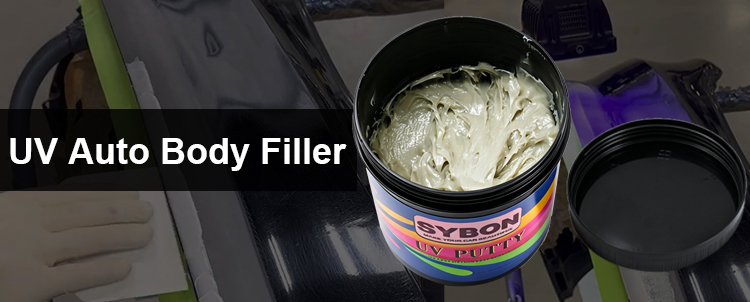
- SYBON UV putty is designed for a wide range of automotive refinishing jobs. It fits most common minor body damage repair tasks in auto collision shops, paint booths and detailing centers.
- It works perfectly for filling small dents on car doors, fenders, hoods and trunk panels. Minor hail damage repair is another popular use case. Shallow scratches, stone chips and surface blemishes on original car paint can also be repaired efficiently with UV putty.
- Besides steel panels, it can be applied on fiberglass body parts, aluminum panels and rigid plastic automotive components. It is widely used during pre-paint preparation work, to level uneven surfaces before spraying primer and topcoat.
- This UV putty is ideal for small batch touch-up work. When you have many minor repair spots on different vehicles, the fast-curing feature helps you handle multiple jobs in one working day. It is also popular in custom car painting projects for precise surface leveling.
Storage, Safety & Handling Tips for UV Putty
- Correct storage and safe handling can preserve the performance and shelf life of UV putty, while protecting the operator during work.
- Store UV putty in a cool, dry location, and keep the container tightly sealed. The product must be kept away from direct natural sunlight. Ultraviolet rays from sunlight will trigger premature curing inside the jar and ruin unused material. Always close the lid immediately after scooping the putty.
- Wear standard personal protective equipment during operation. Nitrile gloves, safety goggles and a suitable respiratory mask are recommended. Avoid direct skin contact and prevent splashes into eyes. If contact happens, rinse the affected area with plenty of clean water promptly.
- Work in a well-ventilated working space. Do not eat or drink in the working area. Keep the product out of reach of children and unrelated personnel. Dispose of leftover material and empty containers following local chemical waste regulations.
- Check the condition of UV putty before use. If you notice unexpected hardening inside the jar, discard the product. Always verify your UV lamp output regularly, because low UV intensity will lead to incomplete curing and weak repair layers.
For the perfect final finish, pair our filler with the HKS High Gloss UV Clearcoat.
Source of this article:https://www.synewchemical.com/
Get to know us through more channels:Youtube.