
In modern automotive refinish workshops, light weight body filler has become an essential consumable for handling dents, scratches, weld marks and surface unevenness on vehicle panels.
As a professional manufacturer of automotive care and auto repair products, SYBON supplies reliable body filler to auto body shops, distributors and fleet maintenance partners in dozens of countries.
This guide explains its core strengths, application scope and the practical advice our technicians give to workshops every week, from pack sizes to curing discipline.
1. What Is Light Weight Body Filler?
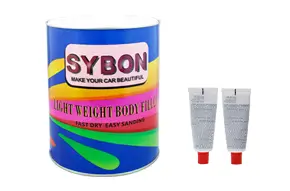
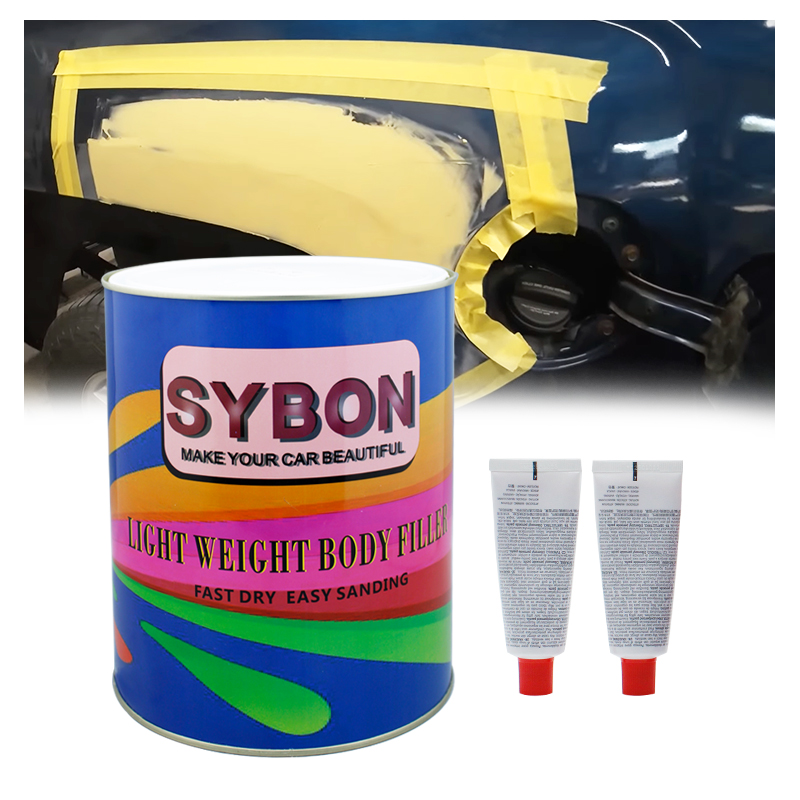
Light weight body filler is a two-component polyester-based repair putty mixed with hollow micro-sphere raw materials, which lowers overall density compared with traditional heavy filler.
It consists of base paste and cream hardener. After full mixing and room-temperature curing, technicians sand the surface flat and prepare the panel for primer and topcoat.
Our packaging specifications include:1kg*12tins/carton, 2kg*8tins/carton, 4kg*4tins/carton and 5.5kg*4tins/carton. Buyer can purchase the required specifications according to their needs.
Unlike conventional heavy putty, this formula cuts the total material weight sitting on a repaired panel without losing mechanical bonding performance. It suits cosmetic repair on passenger cars, commercial vehicles and modified cars. To see the rest of the range, visit our products page.
2. 7 Core Advantages of SYBON Light Weight Body Filler
SYBON’s body filler holds its position in export markets through an optimized raw-material formula and strict production standards. Seven strengths matter most to a workshop.
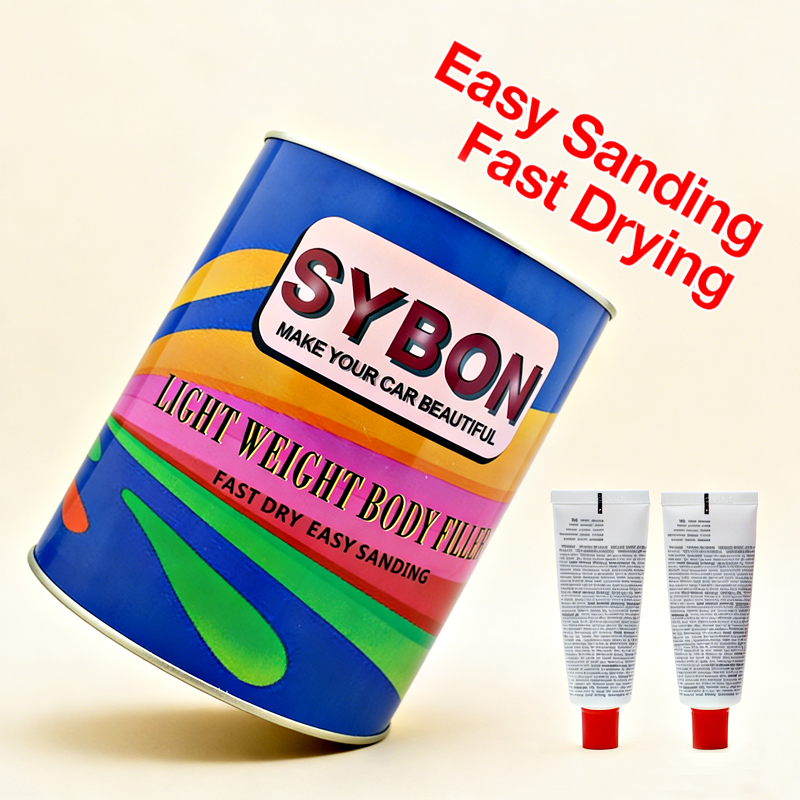
- Easy sanding. The micro-sphere structure resists sandpaper clogging, which shortens manual sanding time and reduces technician fatigue on volume jobs.
- Low shrinkage and crack resistance. After full curing the film keeps its dimension, so sink-back and temperature cracking become rarer.
- Strong adhesion across mixed substrates.It bonds firmly to bare steel, galvanized steel, aluminum sheets and partial fiberglass surfaces.
- Creamy workability. It spreads smoothly under the putty knife, leaves fewer pinholes and needs less secondary filling.
- Fast room-temperature cure. Under normal shop conditions the film reaches sand-ready status in roughly 15 to 20 minutes, shortening the repair cycle.
- Low density. Thin metal and plastic body panels carry less added load, which matters most on bumpers and fenders.
- Coating compatibility. It matches SYBON primers and topcoats, so inter-layer peeling and lifting are far less likely.
3. Which Substrates Suit SYBON Body Filler
Confirm the base material before construction. The filler performs well on bare steel, galvanized steel, aluminum, SMC and fiberglass components.
That covers most collision-repair work on passenger cars and light commercial vehicles. Heavily rusted areas must be stripped back to bare metal before any filler goes on.
If a substrate is unfamiliar, send photos and material details through our contact page and our technicians will confirm the preparation method.
4. Application Tips That Decide the Result
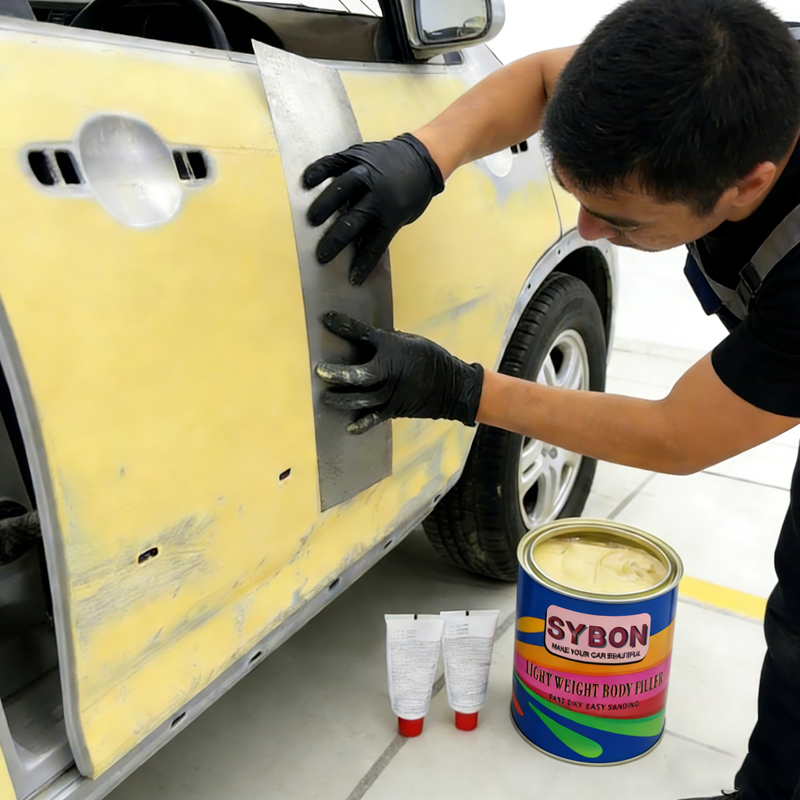
Even a premium filler cannot rescue a rushed application. Four steps decide the result.
First, clean and degrease the repair area, then remove old paint layers and rust residue.
Second, mix base paste and hardener in the recommended ratio, because uneven mixing leaves soft spots that never cure.
Third, build thin layers instead of one thick coat, which keeps pinholes to a minimum.
Fourth, start sanding only after the film has fully cured; early sanding pulls the filler out of the repair.
In addition, storage matters as much as mixing. Keep the tin sealed, out of direct sun and below 30 °C, and discard paste that has started to skin over, because a hardened surface will not disperse evenly through the batch.
5. How SYBON Optimizes Quality Control for Body Fillers
Quality control covers every step of production: raw-material screening, formula debugging, automated filling and finished-product testing.
Each batch passes adhesion, shrinkage and curing-performance checks before it leaves the warehouse, so a repeat order behaves like the first one. Formulas are revised continuously to cut harmful substance content and meet regional environmental rules.
6. Why Choose SYBON as Your Automotive Refinish Supplier
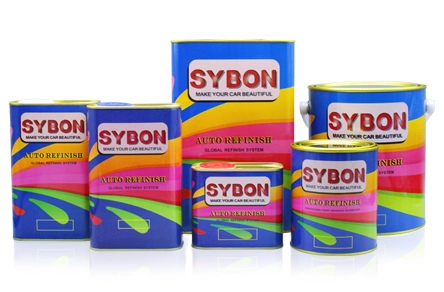
Beyond body filler, SYBON carries a complete refinish portfolio: basecoats, clear coats, hardeners, thinners and a wide range of car care goods.
We support bulk wholesale and customized batch production, and our technical team provides remote construction guidance to distributors and repair shops.
One supplier for filler, primer and topcoat also means one compatibility chain, which removes the guesswork that causes inter-layer failures. Distributors can test a sample drum before committing to a pallet order.
7. Final Thoughts
For workshops chasing higher throughput, light weight body filler improves repair quality while cutting labor cost per panel.
SYBON keeps upgrading formulas to bring stable, cost-effective repair materials to the global automotive aftermarket. Contact our sales team for purchasing or technical consulting.
Source of this article:https://www.synewchemical.com/
Get to know us through more channels:Youtube.