
Osmotic Blistering Automotive Paint: What It Is and Why It Happens
Osmotic blistering automotive paint is one of the most frustrating problems in automotive refinishing. At first, a repaired panel may look smooth, glossy, and perfectly finished. But after a few months, bubbles begin to appear on the painted surface. These blisters may start small, then slowly grow larger as moisture continues to work its way through the coating system. In many cases, the defect becomes more obvious during hot, rainy, or humid weather, when water vapor movement inside the paint film becomes more active.
For distributors, import agents, wholesalers, fleet owners, and refinish shops, osmotic blistering is more than just a cosmetic issue. It damages customer confidence, increases rework costs, and reduces the long-term value of a repair. That is why understanding this problem is so important.
What Osmotic Blistering Looks Like in Automotive Paint
Osmotic blistering usually appears as small raised bubbles or swollen spots on the paint surface. These blisters may be isolated in one area, or they may spread across a larger section of the panel. In the early stage, they can be difficult to notice. The surface may still look acceptable, and the repair may even seem successful. However, over time, moisture accumulates under the coating, pressure builds up, and the blisters become more visible.
This defect often shows up on repainted areas after several weeks or several months. It is especially common on areas that have been repaired with poor surface preparation, insufficient drying, or incorrect application procedures. In severe cases, the blister may eventually break, exposing the layer underneath and forcing the entire coating system to be repaired again.
The reason this problem is so deceptive is that it often does not appear immediately. A vehicle can leave the shop looking fine, yet later develop bubbling when exposed to rain, heat, or high humidity. That delayed reaction is one of the clearest signs of moisture-related coating failure.
SYNEW’s Analysis: Why Does Osmotic Blistering Happen?
According to SYNEW’s experience in automotive refinish manufacturing, the main cause of osmotic blistering automotive paint is improper surface cleaning and surface preparation. Painting is not a single step. It is a complete system made up of many linked processes. If one layer is not handled correctly, the final result can fail even if the topcoat itself is good.
1. Poor cleaning before painting
Before painting, the substrate must be thoroughly cleaned and properly prepared. If dust, grease, moisture, polish residue, or other contaminants remain on the surface, they can become trapped under the coating system. Over time, these contaminants can weaken adhesion and allow moisture to enter the film.
Some workers use gasoline to sand or clean the primer surface. This is not recommended. Gasoline may contain water-soluble additives, impurities, or other substances that can create paint defects, including blistering. Using the wrong cleaning material is a common but avoidable mistake.
2. Moisture left behind after wet sanding
Wet sanding is a common preparation method, but the water used during sanding must be completely removed before the next coating stage. If moisture remains on the primer or substrate, it can later migrate into the film and contribute to blister formation. Even a small amount of trapped water can become a problem after the vehicle is exposed to heat and humidity.
3. Primer applied too thickly
If the primer coating is sprayed too thick, solvent and moisture may not escape properly. The surface may feel dry on top while remaining soft or trapped underneath. This creates a weak coating structure that is more likely to blister later.
4. Insufficient flash time between coats
Every layer needs enough time to flash and dry before the next layer is applied. When the interval between coats is too short, solvents may become trapped in the coating system. This can reduce adhesion, weaken the film, and increase the chance of blistering.
5. Poor-quality body filler
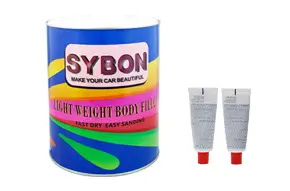
Body filler plays an important role in refinish work. If the filler quality is poor, it may absorb moisture, shrink unevenly, or lose adhesion. These problems can eventually affect the paint layers above it and lead to bubbling.
6. High humidity during spraying
Air humidity has a major influence on paint performance. If the spraying environment is too humid, water vapor can interfere with film formation and drying. This is especially dangerous when the substrate or undercoat is not fully dry. Moisture can enter the coating more easily and create a blistering problem later.
7. Incorrect mixing ratio
Automotive paint must be mixed according to the proper ratio. If the paint, hardener, or thinner is not blended correctly, the coating may not cure as designed. An incorrect mix can reduce chemical resistance, film strength, and long-term durability, making the finish more vulnerable to osmotic blistering.
8. Incomplete edge coverage
During spraying, some corners, edges, and small exposed areas may be overlooked. These tiny untreated spots can become entry points for moisture. Even a small defect in coverage can spread under the coating over time, especially under harsh weather conditions.
Why Good Paint Still Needs Correct Application
It is important to understand one key point: even the best paint film can still be penetrated by moisture. No coating system is completely immune if the process is handled poorly. At first, the finish may look excellent. But if the substrate is not fully dry, the surface is not properly cleaned, or the coating structure is not built correctly, moisture can slowly work its way into the film.
When enough pressure builds up beneath the coating, adhesion between layers weakens. In the end, the result is a blister filled with moisture. This is why osmotic blistering automotive paint is usually not caused by one single factor. It is the result of a chain of mistakes in preparation, application, and drying.
Why Choose SYNEW?
SYNEW is a professional automotive refinish manufacturer from China, focused on delivering both reasonable pricing and strong product performance. For distributors and wholesalers, this balance matters. Many famous brands are expensive, while lower-cost products may not meet market expectations. SYNEW offers a practical middle solution: quality similar to major brands, but with much better cost performance.
SYNEW also provides one-stop procurement services for automotive refinish products, helping import agents, distributors, repair centers, fleet owners, and paint shops source the products they need more efficiently. Even though SYNEW may not have the same global name recognition as some leading brands, its product value, stable quality, and market competitiveness make it a strong choice for local business growth.
If you are looking for a reliable automotive refinish supplier that can help you compete in your local market, SYNEW is a smart partner. We are actively seeking global distributors and welcome cooperation with paint shops, auto repair center owners, wholesalers, and import agents. We are ready to support mutually beneficial partnerships across the full range of automotive refinish products.
If you are interested in becoming a distributor, testing our products, or learning more about SYNEW’s automotive refinishing solutions, please contact us through our website and send us an email. We will get back to you within 24 hours.
SYNEW is ready to grow with you. Better products, better value, and better business together.
Source of this article:https://www.synewchemical.com/
Get to know us through more channels:Youtube.