
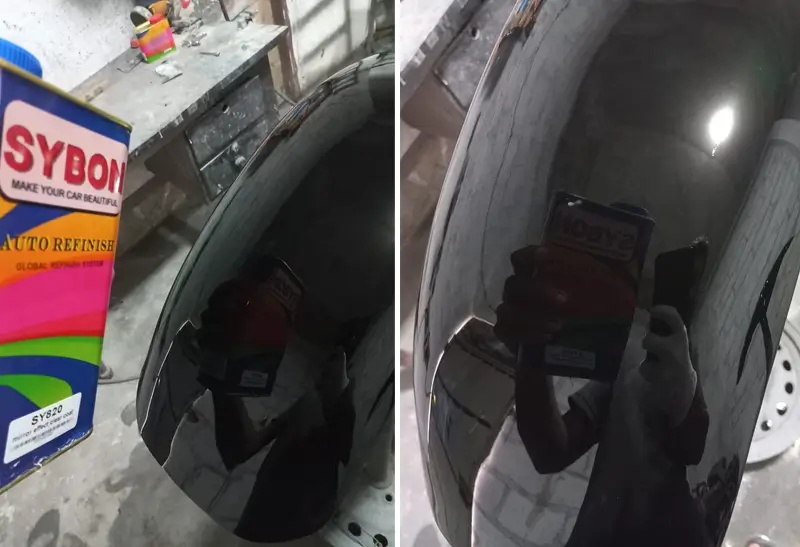
Why a Newly Sprayed Clear Coat Yellowing — And How to Prevent It
As a supplier to import agents, wholesalers, dealers, fleet owners and professional repairers, you know that the final impression of any refinish job rests on the clear coat. You spray a perfectly glossy clear coat — it looks mirror-smooth — and yet hours or days later it has a yellowish tint. That outcome costs rework time, wastes product, and can harm customer trust. In this article I’ll explain the most common causes of clear coat yellowing, the practical steps to prevent it in a professional shop, and what to do if yellowing already occurred. I’ll also explain why choosing the right supplier matters — and how SYNEW supports your business with cost-effective, high-quality automotive refinish products.
Common causes of clear coat yellowing
1. Contaminated or unclean spray equipment
Even tiny residues inside the gun, cup, or lines (old solvent, polish, oil, or wax) can react with fresh clear coat or remain suspended in the film. Those contaminants can change the cured clear coat’s optical properties and produce yellowing or clouding soon after curing.
2. Degraded or expired clear coat
Clear coats have a shelf life. Resins and additives can oxidize, thicken, or separate over time — especially if stored in poor conditions — and the cured film will lack clarity and may amber.
3. Incorrect or poor-quality hardener (catalyst)
Using the wrong hardener type, a low-grade hardener, or one contaminated with moisture can produce incomplete or abnormal curing. That can cause ambering, soft spots, or reduced clarity.
4. Wrong mixing ratio or inaccurate measuring
Over- or under-catalyzing alters the chemical cure. Even small measurement errors (by eye rather than accurate measuring cups) can lead to yellowing, poor gloss, or soft film.
5. Moisture and humidity during mixing or spraying
Moisture contamination — either in the hardener or from high ambient humidity — can cause cure reactions that change color (especially with some polyurethane systems). Also, leaving hardener cans open exposes them to moisture and degrades performance.
6. Solvent entrapment (inadequate flash/dry time)
If solvents don’t flash off properly before curing (too thick coats, low flash times, or incorrect air movement), trapped solvents can amber the film over time.
7. Incompatible or reactive underlying layers
Incompatibility between basecoat/primer and a particular clear coat system (or contamination left on the substrate) can chemically interact and lead to discoloration.
Practical shop checklist to prevent clear coat yellowing
1.Clean and inspect your spray guns, cups, and fluid lines every day. Disassemble, flush with the correct solvent, and dry before use.
2.Always follow the clear coat manufacturer’s technical data sheet (TDS) for mixing ratios, pot life, recommended hardeners, and flash times. Keep a printed TDS at each spray station.
3.Use precision measuring cups and scales for mixing. Never “eyeball” the ratio.
4.Use the recommended hardener (type and brand) and close hardener containers immediately after use. Hardener cans are often hygroscopic — exposure to air/moisture shortens their effective life.
5.Store coatings and hardeners in a cool, dry place away from direct sunlight and temperature extremes. Rotate stock (first in, first out) and label open cans with the date opened.
6.Maintain proper shop temperature and humidity during mixing and application. Use dehumidifiers or climate control where necessary.
7.Conduct regular test panels when changing a product lot, batch, or hardener. Accelerated bench tests (heat, solvent rubs) catch issues early.
8.Train staff on solvent flash times, film build per coat, and correct spray technique — over-applying clear is a frequent cause of trapped solvents.
If the clear coat has already yellowed — corrective steps
1. Assess the extent
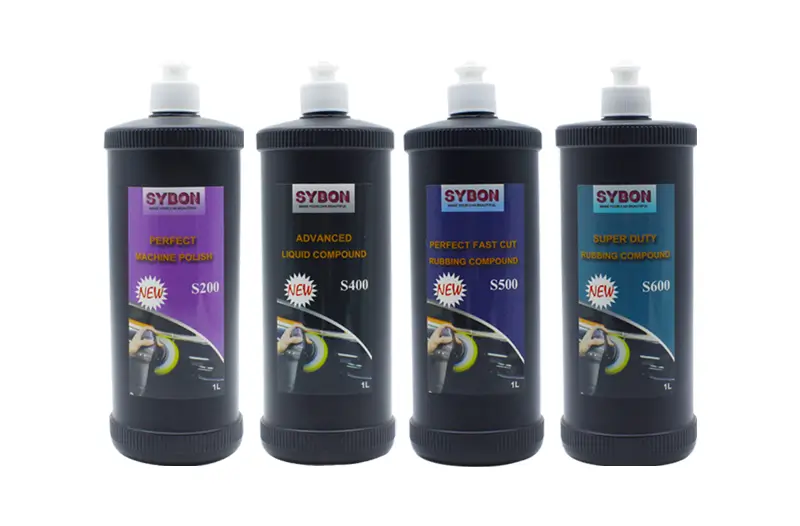
Light ambering limited to the surface may be corrected by compound/polish in some cases; deeper yellowing often requires sanding and recoat.
2. Test polish first
On a small, inconspicuous area or test panel, try correction polishing to see if the ambering is only superficial.
3. Sanding and reapplication
If polishing doesn’t restore clarity, the standard repair is to sand the affected clear coat out to a sound substrate (or to the basecoat/primer if necessary), clean thoroughly, then reapply a fresh clear coat using the correct processes.
4. Root-cause verification
Before reapplying, confirm the root cause (equipment, materials, mixing, or environment) so the problem won’t repeat.
Why your supplier choice matters — and how SYNEW helps
SYNEW offers one-stop sourcing for automotive refinish products designed for professional shops, wholesalers and distributors. While we may not have the same market fame as some legacy brands, our products deliver comparable quality at a superior price point — a winning combination for businesses that want reliable performance without overpaying.
What SYNEW provides for partners:
1.Clear technical data sheets and application guides to reduce on-job errors.
2.Batch quality control and sensible shelf-life guidance so you avoid degraded product.
3.Recommendations for compatible hardeners and best spray practices tailored to our clear coat systems.
4.Samples for testing: if you are an import agent, dealer, or repair center interested in evaluating our products, request a sample and we’ll respond within 24 hours.
5.A strong margin profile for distributors: cost-effective products that let you compete locally while preserving profitability.
Quick summary — action items for your shop
1.Clean guns daily; use correct solvents.
2.Measure precisely; follow the TDS.
3.Close hardener cans; use opened hardener quickly.
4.Test new lots on panels before full production.
5.If yellowing appears, polish test first; otherwise sand and recoat after fixing the root cause.
If your business is looking for a dependable, cost-competitive automotive refinish partner, SYNEW is actively seeking global distributors and agents. We welcome importers, wholesalers, paint shop owners and repair center managers to request product samples and technical support — contact us via our website and we will respond within 24 hours.
Source of this article:https://www.synewchemical.com/
Get to know us through more channels:Youtube.