
Bubbles and pinholes
Achieving a flawless automotive refinish starts with the perfect base, and mastering repair body filler application is the most critical step in this process. Whether you are repairing collision damage, fixing minor dents, or restoring a classic car, the quality of your filler work directly determines the final paint result. However, even experienced auto body technicians can encounter unexpected challenges during construction. From frustrating pinholes and poor adhesion to premature hardening, these issues not only waste valuable time and materials but also compromise the long-term durability of the vehicle's repair. In this comprehensive guide, we will explore the 7 most common repair body filler problems, analyze their root causes, and provide professional, actionable solutions to help you achieve a smooth, long-lasting finish every time.
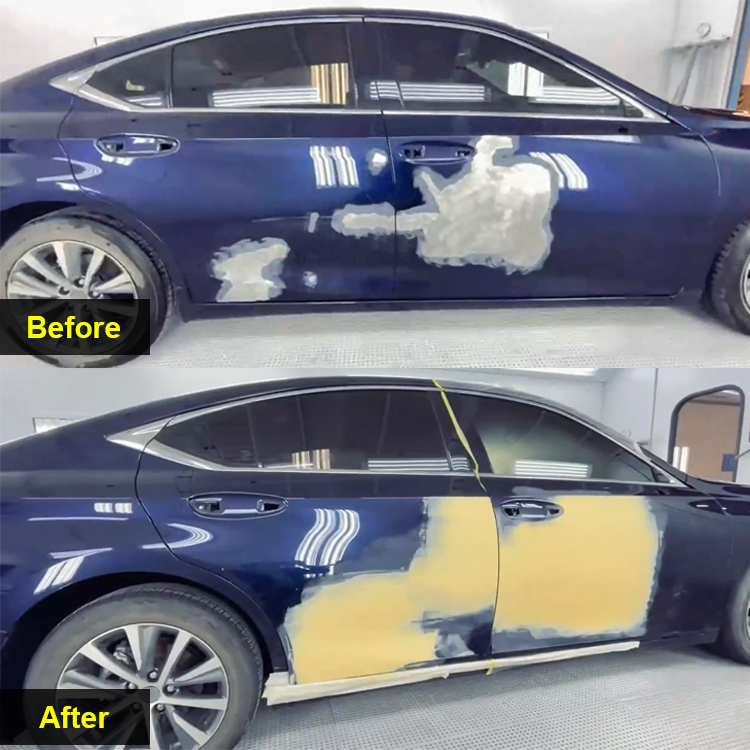
Phenomenon
Small pits or raised blisters form on the surface after curing.
Causes
- Stir the putty and hardener violently, trapping air inside the mixture.
- Apply an overly thick single layer at once, blocking air escape.
- Oil, dust or moisture remains on the base surface.
- Heat or bake the repair body filler before it is fully cured.
- Work in an overly humid environment.
Solutions
- Mix gently in one single direction to avoid wrapping air.
- Use thin multi-layer scraping, squeeze out air with a scraper each time.
- Clean and fully dry the substrate before construction.
- Complete room-temperature curing first if heating is needed.
- Operate in dry, well-ventilated spaces.
Poor adhesion, repair body filler falls off easily
Phenomenon
The putty warps, cracks or detaches when sanding.
Causes
- The base surface is smooth without rough grinding.
- Grease, dirt and oxidation residues are not cleaned away.
- Insufficient hardener leads to incomplete crosslinking curing.
Solutions
- Sand the base to form a matte rough texture.
- Degrease the surface thoroughly and wait for full drying.
- Follow the standard mixing ratio strictly.
Too short operating time, putty hardens fast
Phenomenon
Mixed putty thickens and solidifies quickly before finishing filling work.
Causes
- Excess hardener is added.
- High ambient temperature speeds up chemical reaction.
- Mix a large batch of putty at one time.
Solutions
- Reduce the proportion of hardener for longer working time.
- Prepare small batches that can be used up within the available operating period.
- Carry out construction in a cool environment.
Difficult to sand, rough surface after drying
Phenomenon
Heavy sanding workload for the repair body filler...
Causes
- Sand the putty before it is fully cured.
- Unreasonable hardener proportion results in abnormal hardness.
Solutions
- Wait for full curing for at least 20 minutes under normal temperature before sanding.
- Control the mixing ratio of putty and hardener accurately.
Cracks appear after curing
Phenomenon
Linear cracks generate on thick filled areas.
Causes
- One-time ultra-thick coating.
- Rapid high-temperature heating without natural curing in advance.
Solutions
- Scrape multiple thin layers instead of one thick layer.
- Fully dry the putty naturally before any heating treatment.
Permanent sticky surface, unable to cure completely
Phenomenon
The surface stays tacky and cannot be polished smoothly.
Causes
- Not enough hardener added.
- Water vapor contacts the mixed putty during operation.
- Expired putty with deteriorated raw resin.
Solutions
- Match the hardener proportion as required.
- Keep the construction environment and substrate dry.
- Use the product within the 12-month shelf life, store it sealed in cool and dry places.
Sagging on vertical surfaces
Phenomenon
The putty slides down vertical planes after scraping.
Causes
Excessively thin mixture, single over-thick layer.
Solutions
- Strictly follow the mixing standard to keep proper consistency.
- Apply thin layers separately.
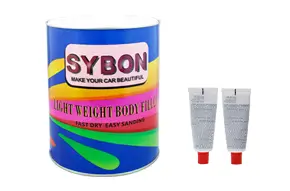
By mastering these techniques, you can avoid these common repair body filler problems and achieve a flawless, smooth finish. For high-quality materials that guarantee easy sanding and fast curing, explore our professional automotive refinish products.
Source of this article:https://www.synewchemical.com/
Get to know us through more channels:Youtube.